
My seven best tips for finding your home sooner

We help our clients find their property, every day, every week, every month. Many come to us after they have been searching for over a year. In fact, some clients we’ve assisted have been searching for over two years. The surprise they experience when we locate them a property that meets all of their requirements, and within budget is always exciting. Most can’t believe it, and their subsequent google reviews often indicate this.
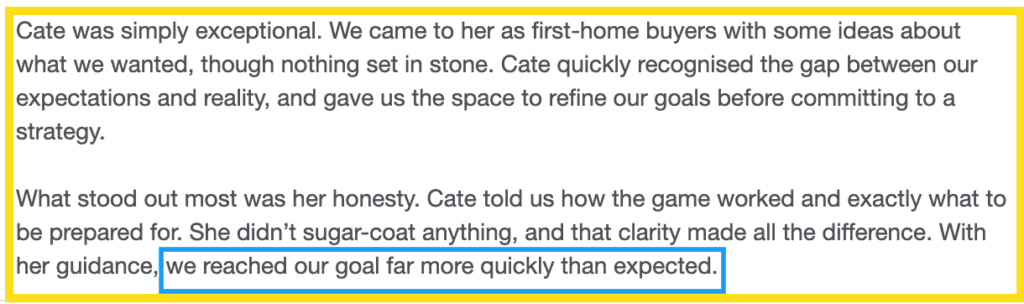
We are sometimes told, “We couldn’t have done this without you.”
The reality is, they could.
We just apply the right tools, target the right locations, and move quickly in the space that we’re trained and experienced in; residential real estate. Of course there are differences. We know the nuances of property. We have long-standing relationships with the selling agents. And we know when to trust, who to trust, and how to read the play.
But, for those who are out there, searching away, and navigating this competitive landscape, this Sunday blog is for you.
I’ve listed the top seven things you can do to make a positive difference, and shave serious time off your waiting time.
Get your finance in order. If you don’t know the difference between an indicative, online finance pre-approval, and a credit-assessed pre-approval, you need to chat to a finance professional. A strategic mortgage broker will be able to advise you if you are in a position to make unconditional offers or bid at auction.

There is nothing worse than having an excited client come to me with a property, only to find that they don’t have a properly assessed, pre-approval in place. Without this confidence to move forward unconditionally, they are likely to miss out on the property if things heat up and unconditional offers are made by other buyers.
Finance doesn’t just relate to pre-approval though. It also relates to deposit being on hand, equity being available, (for those who are utilising equity from either their own property or a guarantor’s property), and it also relates to a sale if the buyer is upgrading and needs to sell first.
This is the first step to property acquisition, and it’s a very important one. Without this fundamental stone set in place, any effort to purchase a property could place the buyer under enormous risk.
Without wanting to labour the point too much, if a property is purchased unconditionally with a 10% deposit, the buyer is committed and that deposit is at stake. If the buyer cannot fulfil their obligations in the contract and settle the purchase, they will not only forfeit their deposit, but could be sued for any losses that the vendor suffers.
Have a strategy, and make sure it’s realistic and feasible. A big part of our strategy session with our new clients involves a feasibility test on their wish-list. We contrast this against their budget and needs, (both present and often future). It can take a few goes, but it’s a valuable exercise that sometimes provides a tough reality check. Other times, it can provide comfort and give buyers confidence that they are on the right track. A well-mastered strategy will give the buyer a good list of viable properties each week, but not such an abundance that they are completely smacked with a crazy number of properties to check out.

I always say, “If the search delivers between two and five suitable properties to inspect each week, the search radius and search criteria are set correctly.” There will always be the specific, needle-in-a-haystack briefs that we sometimes take on. But these types of searches are not typical for a buyer who is keen to secure their home in a timely manner. They are more often the types of searches that an upgrader or down-sizer will take on when they don’t have a burning need to secure their next property.
Understand the seasonality of the market. Our metro city market closes down over the Christmas break. Agents work hard all the way up to Christmas Eve, and then they breathe a sigh of relief and take holidays. Large offices may function on skeleton staff following New Years Day, but most don’t officially reopen until mid to late January. With the exception of a few, most fresh auction campaigns are scheduled for an early February auction.
Things then heat up through late summer and autumn, with a little break over Easter and a season that slows down through winter. The coldest months do still produce listings, but they are usually in low supply.
Spring in Melbourne usually heats up as the football finals move out of the way, and the October to December sprint starts all over again.
Expecting to secure a property easily in the lower-volume, (or shutdown) months isn’t sensible.
Being pre-approved, primed and ready to shop in Autumn and late Spring/early Summer gives every buyer an advantage.
Be prepared to scour every eligible option out there, as long as it fits within your must-have criteria and location. Sometimes the online pictures don’t look so incredible. And sometimes the inspection times clash with other plans. A dedicated buyer will prioritise the search and investigate every potentially viable option out there.

Property is a numbers game. Experience has taught me that the online photos and descriptions aren’t always reliable.
When you see a great option, make it clear to the agent that you are serious. Many buyers suggest that they can’t, (or shouldn’t) tell the agent too much. But there is as fine line between showing all of your cards, and not being shut out of the deal altogether.
Agents collect names and numbers at the door. Plenty of times, I’ve seen buyers give fake numbers, and I’ve seen buyers play down their interest in a property.
If you have any degree of interest in the property, it’s easy to simply say to the agent, “I have interest in this property. Will you please keep me informed?”
Requesting a contract is prudent if your interest is genuine. It will enable you to get onto the next step; due diligence.
Do the due diligence. The first stop is to get a legal review of the contract underway. Like pre-approvals, legal reviews can vary too. A thorough legal review will include, but isn’t limited to:
- Checking title details, including the title boundaries, zoning and encumbrances. This includes flood zones and water-related overlays.
- Looking further into any possible missing permits and certificates, and any hints of non-permitted, (or illegal) works. There is only so much a solicitor or conveyancer can see from online photos and a contract, so it’s important to flag any additional items which aren’t obvious in the online listing. This could include new shedding, pool/spa, new renovation works or any ‘creative’ works that look like they are DIY.
- A review of any special conditions that could disadvantage you or spell trouble down the line

Pricing analysis is vital. Recent comparable sales analysis is something that most buyers can conduct themselves.
Checking the planning register and any neighbourhood updates online is helpful too. Most councils have planning registers that detail nearby applications and approvals.
Don’t be too conservative. This can apply to price, conditions, and speed to action. I’m not suggesting a buyer should pay top dollar, but I am suggesting that an unrealistic offer could spell GAME-OVER before the negotiation has even commenced.
Another conservative blunder I often see buyers make relates to conditions. Loading their contract with conditions, particularly finance or a subsequent sale, can give them a significant disadvantage in a competitive market.
There is certainly a time and a place for either/both of these conditions, but if they aren’t necessary, they can shut a buyer out of the runnings to secure a property.
Buyers should always be prepared to put a genuine offer in writing. It’s not a real offer if it’s not on a contract. People can suggest to me all they like that they are more comfortable with a verbal negotiation, but this approach carries risk.
Lastly, but most importantly, dithering with an offer is dangerous. Delay-tactics sometimes work in a buyers favour, but it’s an incredibly strategic move, and one that needs absolute confidence that no other buyers are likely to enter the negotiation ring. Delaying can sometimes send the wrong message to an emotional vendor.

Consider an older couple who are keen to see their home sell to a young couple. If they sense that the couple are disinterested or having second thoughts, they can quickly switch their allegiance to an alternative buyer. Delaying can also give the agent the impression that the buyer may be a cooling-off risk. An indecisive buyer could create a mess if they were to cool off on their purchase. Agents who sense a non-committal, or indecisive buyer may just reach out to other buyers.
As they often say with negotiations, “Time is of the essence”.