
In my role as a buyer’s agent, I’m often asked why I rarely recommend brand-new property to my clients. It’s a fair question. New homes look appealing, they represent low-maintenance, and the marketing around them is very persuasive. But after nearly two decades of buying property for clients, I’ve learned that brand-new means more risk, higher cost, and weaker long-term performance.
When things go wrong with settlement or defects, brand new can spell stressful too.
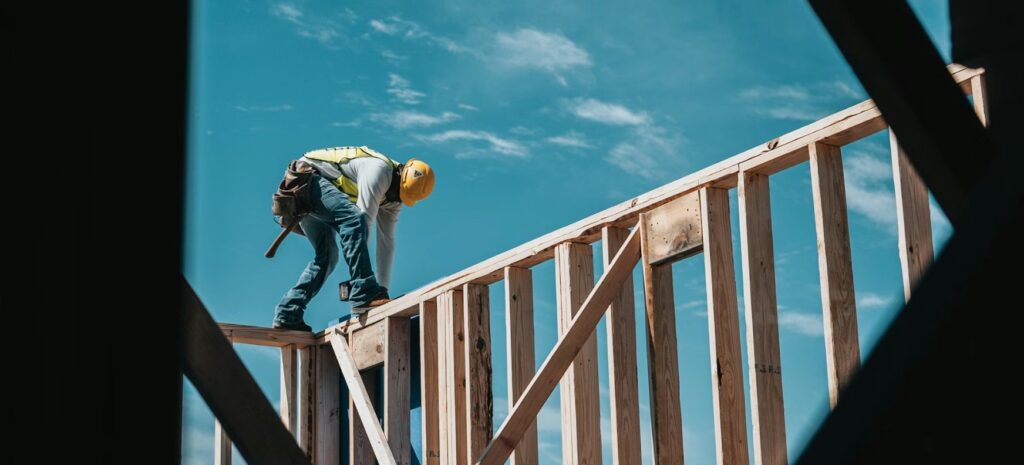
Here are the key reasons I’m cautious about buying brand-new property.
You pay a premium for being the first owner
When you buy brand-new, you are almost always paying a builder or developer’s margin. For higher density developments, the marketing costs, display suite costs, and sales commissions are all built into the price too.
Unlike an established property, where the value is underpinned by comparable sales, new property pricing is often set by what the developer needs to achieve to make the project viable. In many cases, the prices are elevated above market value.
That means the moment you settle, the property may not be worth what you paid for it.
Buyers are often romanced by the marketing collateral, but in a lot of cases, they are influenced by the low deposit regime. In some cases, a deposit as little as one thousand dollars can secure a purchase.
I have heard countless instances of buyers discovering that their brand-new purchase values lower at settlement than the contract price. This is known as a valuation shortfall, and it can be particularly problematic when the buyer has insufficient funds to bridge the gap. This isn’t even taking into account a softening market during the construction period.
Depreciation works against owners in the early years
Cars aren’t the only assets that depreciate when they’re new. Buildings do too.
While land appreciate over time, the building itself depreciates. When you buy brand-new, you are buying at the point where the building component is at its highest value. The land to asset ratio will be low, depending on the type of dwelling. In some cases of high rise apartments, the land to asset ratio could be lower than 20%.
This ratio is why some properties are worth less than what they were purchased for, years later.
With established property, much of that depreciation has already occurred, and you are often paying more for the land component, which is what typically drives long-term capital growth.
I aim for 60-85% land to asset ratio, depending on the client brief and their appetite for maintenance and upgrades.
New estates often lack scarcity
One of the biggest drivers of capital growth is scarcity.
Established suburbs usually have limited land, established infrastructure, mature streetscapes, and a fixed number of homes. That creates competition.
New estates, on the other hand, often have hundreds, (sometimes thousands), of similar homes being built at the same time.
If buyers can choose between ten identical houses down the road, there is no urgency, and no scarcity premium.
This lack of scarcity can hold back price growth for years.
Off-the-plan risk is real
Buying brand-new often means buying off-the-plan, and that introduces additional risk.
During the construction period:
- Lending policies can change
- Your borrowing capacity can change
- The valuation can come in short
- The developer can delay the project
- The market can move against you
I have seen buyers locked into contracts signed years earlier, only to find that their financial position no longer allows them to complete the purchase without stress.
I have had challenging experiences with clients who have purchased townhouses off-the-plan. The delays associated with the titles office and the timing of settlement can be particularly stressful.
That is not a position I like my clients to be in.
Build quality is not always better
There is a common assumption that new homes are built better than older homes.
In reality, build quality varies enormously.
Many modern builds are constructed quickly, with tight margins and high turnover. Materials can be lighter, trades are often under time pressure, and defects are not uncommon.
Older homes, particularly those built in established inner- and middle-ring suburbs, were often built with more durable materials and on larger parcels of land.
That doesn’t mean every old home is perfect, but it does mean new doesn’t automatically equal superior.
Chasing up builders and trades can be stressful
Buyers assume that builder’s warranty insurance offers them easy protection. Unfortunately, this isn’t necessarily the case. Builder’s warranty insurance only comes into play if the builder dies or becomes insolvent. Otherwise, the onus is on the builder to return to the property and fix the issues.
Not all builders are this committed. And when the issues identified are associated with other tradespeople, the lines can get blurred when the question arises, “Who should be fixing this?”
Taking a builder to VCAT to fix issues is no fun, and the delays can spell further risk if building defect is worsening over time. Aside from the legal costs, the stress and disappointment for the buyer takes the gloss of the excitement of the finished product.
My focus is long-term performance
When I buy for clients, my priority is not how new the property is.
My priority is:
- Strong land component
- Scarcity
- Proven demand
- Established location
- Long-term capital growth potential
Brand-new property can suit some buyers, and for quality builds in premium areas, the long term performance can be good.
But for investors, and for buyers who want their property to work hard for them over time, I usually find that established homes in proven locations offer a more reliable outcome.
And after decades in the industry, long term performance is something I value more than shine.
REGISTER TO OUR NEWSLETTER
INFORMATION
CONTACT US
1A/58 ANDERSON STREET,
YARRAVILLE VIC 3013
0422 638 362
03 7000 6026
CATE@CATEBAKOS.COM.AU