
The True Value of a Car Space on Title in Today’s Market
Car spaces on title can seem a ridiculous debate for anyone who lives in the outer suburbs or in the country. But where land is at a premium, this conversation often pops up.
Any good buyer’s agent will steer their clients away from a unit that doesn’t offer parking on title. But when it comes to houses, we all generally sit a bit differently. Provided the street allows on-street parking readily, we do purchase single-fronted cottages in great, inner-urban locations.
“When in Rome” seems to apply to these pretty dwellings, and for those who have fallen in love with cottage living, finding a park after work on a wintry Friday night in the rain is the trade-off. But for those who incorporate a car space on title on their shopping criteria list, the cost of the car park needs other be weighed up. These two recent sales are good examples of the relative cost of a car space on title.
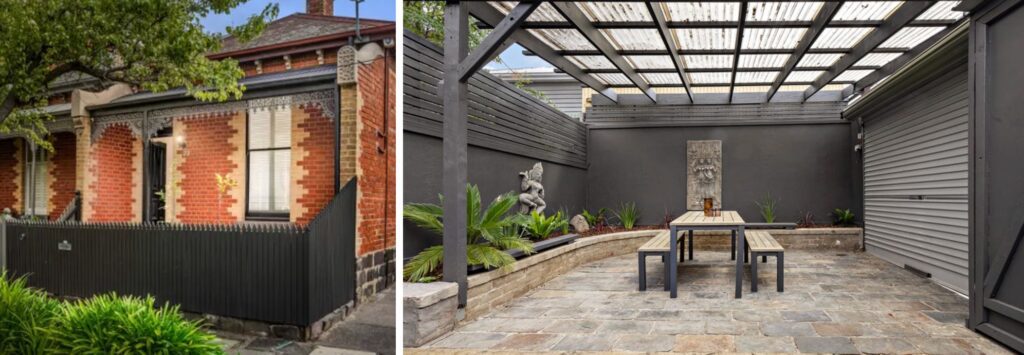
Each house is located in the same, inner-suburb. The houses are 500m from each other. The streets are similar in style and streetscape, and each within equal amenity to shops and cafes. Their land size has an 18 square meter differential. The internal quality is comparable for each, and both offer two bedrooms and two bathrooms.
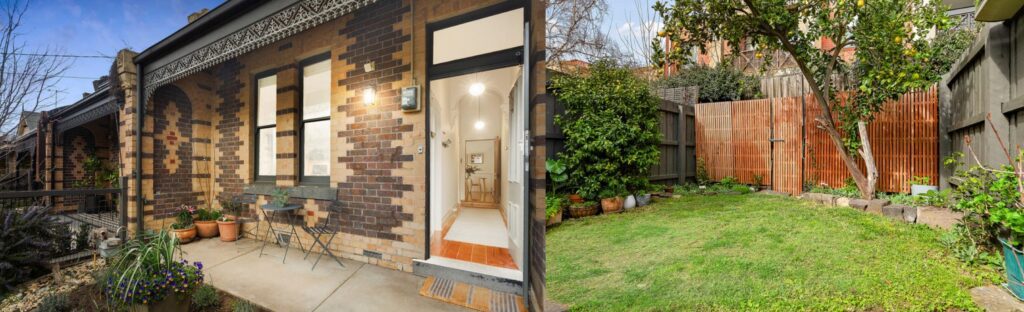
The sales were both in October this year.
The house with the option for car parking on title sold for $280,000 more than the house without car parking option on title. That equates to a 23% premium.
Finding a park in these busy, inner suburbs is no mean feat, so it’s understandable that a resident would be prepared to pay the additional price tag. But when is this cost an overcapitalisation? The cost-benefit equation suggests that there are alternatives.
Parts of our city have been gridlocked for five years now with the development of the Metro Tunnel Project. Adding an additional line through the heart of the city, and creating five new station will be welcome relief for our commuters, and it will enhance travel times for many. Not everyone enjoys public transportation, and not everyone benefits from it, but there are plenty of people I meet who have made the decision to give up the car and rely on PT. Conveniently located share cars can be spotted all around the inner suburbs of Melbourne, and locally based hire car companies offer plenty of deals for non-car owners to take advantage of weekend trips.
I recently discussed the concept of hired vehicles with a couple who live in Middle Park. This beautiful, leafy suburb is wedged between the beach and Melbourne’s Albert Park Lake and it has a median house value over $2,500,000. Based on the same logic as above, that would place the value of a car space on title in excess of half a million dollars, based on the 23% premium figure calculated above. The couple I chatted with made the point that they could hire a private driver for their travels and still be economically in front for decades.
Many people will remind me that the resale value, (and future capital gains) will be stronger with the car space on title. But what would they be giving up by prioritising the car space? A third bedroom? A premium street? A courtyard? Or a renovated home? It could be argued that the cost of the car space impacts lot of other criterion with higher priorities for some people.
Units without car spaces remain a no-no for me however. The reasons are fourfold;
- Streets with blocks of units tend to be more congested with cars. Couples with two cars will invariably park one in the street. Friends will park in the street, and blocks of units tend to exist together. Unit-block streets are notoriously difficult with on-street parking.
- Councils don’t readily grant parking permits for newer builds, so a new build without a car space is often problematic.
- Most units come with car spaces, so buyers will often avoid the ones without. Units have experienced softer conditions over the past fifteen years, and buyers are quite unforgiving when it comes to unit deficiencies.
- Units are less scarce than period cottages. They are being built constantly and supply is increasing.
With the increasing popularity of electric vehicles, unit buyers are adding electric charging accessibility to their list. Not all apartment blocks cater to this, as the cabling infrastructure lacks the capacity for high current charging. Buyers need to consider the impact of this on their future car plans.
Who ever thought the decision to have a car would raise so many questions?