
Why Investment-Grade Fundamentals Matter When Buying a Home
For many Australians, buying a home is both an emotional milestone and the largest financial decision they will ever make. It is the place where memories are made, families grow and life unfolds. However, while lifestyle considerations naturally influence purchasing decisions, it is equally important to recognise that a home is often the cornerstone of long-term wealth creation.
This is why we encourage home buyers to consider investment-grade principles, even when purchasing a principal place of residence.
The strongest home purchases are those that satisfy lifestyle needs while also possessing the qualities that underpin long-term capital growth. Long-term growth via the principle place of residence is particularly important in this current economic climate too. In Australia, the home is generally exempt from Capital Gains Tax (CGT) under the Main Residence Exemption. Down-sizers often benefit from this exemption, with these tax-free gains being utilised in retirement.
What Makes a Home Investment Grade?
An investment-grade home is a property that demonstrates enduring characteristics that consistently attract buyer demand.
These qualities often include:
- A well-established location with strong access to shops, transport, quality schools and lifestyle amenity.
- Scarcity, whether through land content, character or an irreplaceable position.
- Broad buyer appeal that extends beyond a niche market.
- A practical floorplan with excellent natural light and functional living spaces.
- Attractive streetscape and neighbourhood appeal.
- Strong underlying land value relative to the dwelling.
These are the attributes that tend to support stronger long-term capital growth because they remain desirable throughout changing market cycles.
The Challenge of Wearing Two Hats
The difficulty for many buyers lies in balancing these two objectives.
On one hand, the property must perform as a comfortable and enjoyable home. On the other, it should function as a high-quality long-term asset.

These objectives often align, but not always.
Some buyers become overly focused on lifestyle features, dismissing exceptional properties because they lack a butler’s pantry, ensuite or second living area. Others make the opposite mistake, becoming so committed to purchasing an investment-grade property that they overlook aspects of liveability that will significantly influence their day-to-day enjoyment.
Neither approach produces an ideal outcome.
A home that continually frustrates its occupants can result in regret, costly renovations, an earlier-than-planned move, or ongoing dissatisfaction. Equally, purchasing purely for investment performance without considering lifestyle can leave buyers feeling disconnected from the very home they intended to enjoy.
Investment Grade Should Never Mean Sacrificing Liveability
One of the greatest misconceptions is that investment-grade homes require compromise on comfort. While Land to Asset Ratio is an important capital growth driver, a dwelling with too low a percentage can spell trouble. For example, when the land value represents 95% of the overall property value, the remaining 5% apportioned to the dwelling suggests that the building will present issues, and/or be far too dated for comfort.
Features such as natural light, privacy, functional layouts, proportionality, seamless indoor-outdoor connection and attractive street appeal consistently attract owner-occupier demand. These characteristics not only improve everyday living but also strengthen future resale performance.
After all, future buyers are influenced by many of the same emotional drivers as today’s buyers.
Homes that simply feel good often become the homes buyers compete hardest to secure.
Avoid Focusing on the Wrong Features
Another common challenge is placing too much emphasis on cosmetic presentation.
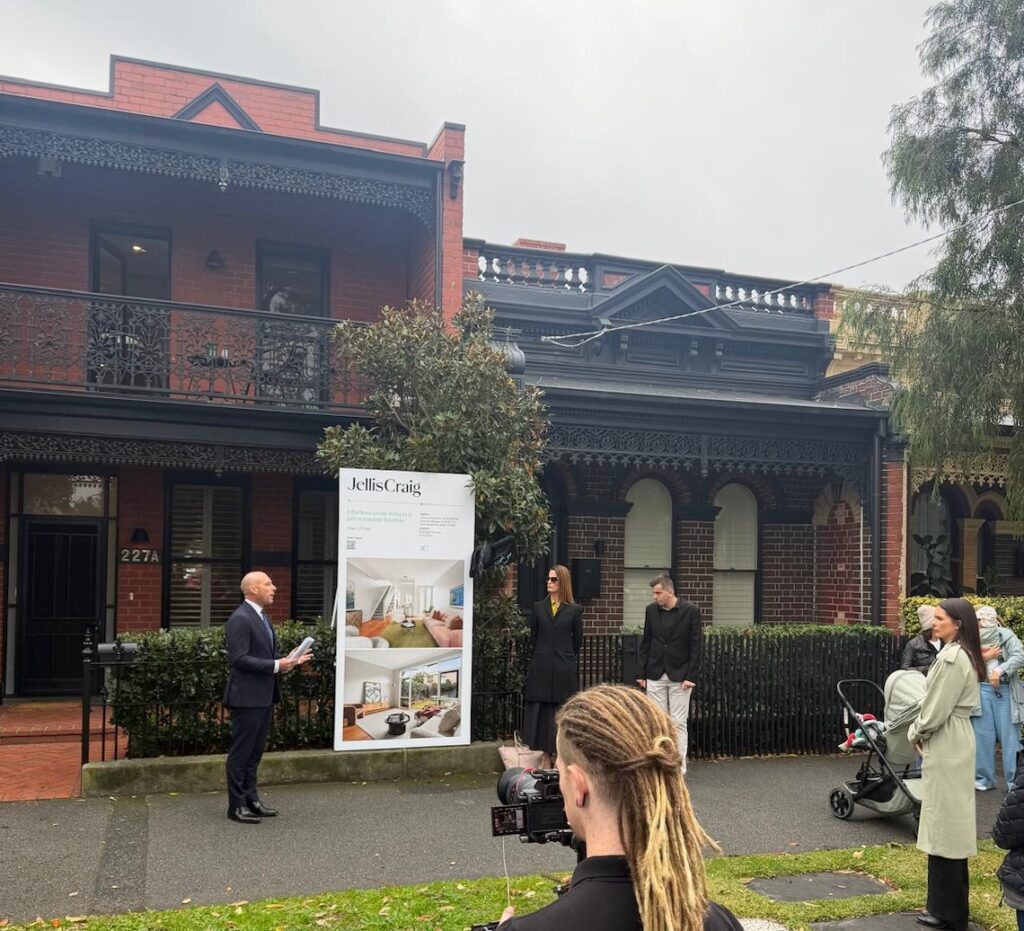
Fresh paint, designer lighting, and carefully curated interiors can create an immediate emotional response during an inspection. However, these features are relatively easy to create, and they count when selling. However, they don’t impact capital growth.
What cannot easily be changed is location.
Nor can orientation, surrounding amenity, neighbourhood quality, heritage eras, or proximity to schools and transport.
These are the characteristics that underpin long-term performance.
Sophisticated buyers understand the difference between cosmetic appeal and genuine investment fundamentals.
Finding the Right Balance
The most successful home purchases rarely maximise lifestyle at the expense of investment quality, nor do they pursue investment performance while ignoring everyday practicality. Instead, they strike a balance. The ideal property supports the owner’s lifestyle while possessing the qualities that future buyers will continue to value decades into the future.
This often requires distinguishing between genuine needs and desirable extras. A home does not need every luxury inclusion to become an exceptional long-term purchase, just as an outstanding suburb alone cannot compensate for a floor plan that fails to meet practical needs.
Every buyer’s priorities will differ, but the objective should remain consistent. Those who select a property that performs well both as a home and as a financial asset will reap the highest rewards.
Buying a home is about far more than finding somewhere to live. It is an opportunity to establish a foundation for future financial security while creating a place that supports the lifestyle we want today.
The strongest purchasing decisions are rarely driven solely by emotion or entirely by numbers.
They are shaped by a careful balance of both.